Recently,
a series of mechanical injury accidents reported by emergency
management departments across the country have once again focused public
attention on the implementation of Lockout Tagout (LOTO) procedures in industrial production. Data shows that over 80% of
equipment maintenance casualties are caused by the failure to strictly
implement LOTO regulations, revealing that this safety measure, often
regarded as a "routine formality", is actually a crucial line of defense
for life and production safety.
LOTO,
which refers to the practice of locking energy sources of equipment and
hanging warning tags during maintenance, is a basic safety regulation
in high-risk industries such as machinery manufacturing, chemical
engineering, and coal mining. However, in actual production, some
enterprises and operators hold a lucky mentality, believing that
"short-term maintenance does not require such cumbersome steps" or
"familiar equipment can be operated without locking". It is this kind of
negligence that leads to frequent accidents.
In
a recent accident case in a machinery factory in North China, a
maintenance worker tried to repair a conveyor belt without locking the
power switch. During the operation, a colleague who was unaware of the
situation turned on the equipment, resulting in the worker being caught
in the machine and suffering serious injuries. The investigation report
pointed out that the enterprise had formulated LOTO management systems,
but there was no supervision and inspection in the implementation
process, and the employees lacked systematic safety training, eventually
turning the safety system into a "piece of paper".
On
the contrary, enterprises that strictly implement LOTO procedures have
effectively reduced safety risks. Jinneng Holding Shuozhou Coal Mine,
which has been promoting the "lock culture" in recent years, has
achieved zero safety accidents in equipment maintenance for three
consecutive years. The mine has formulated a detailed LOTO operation
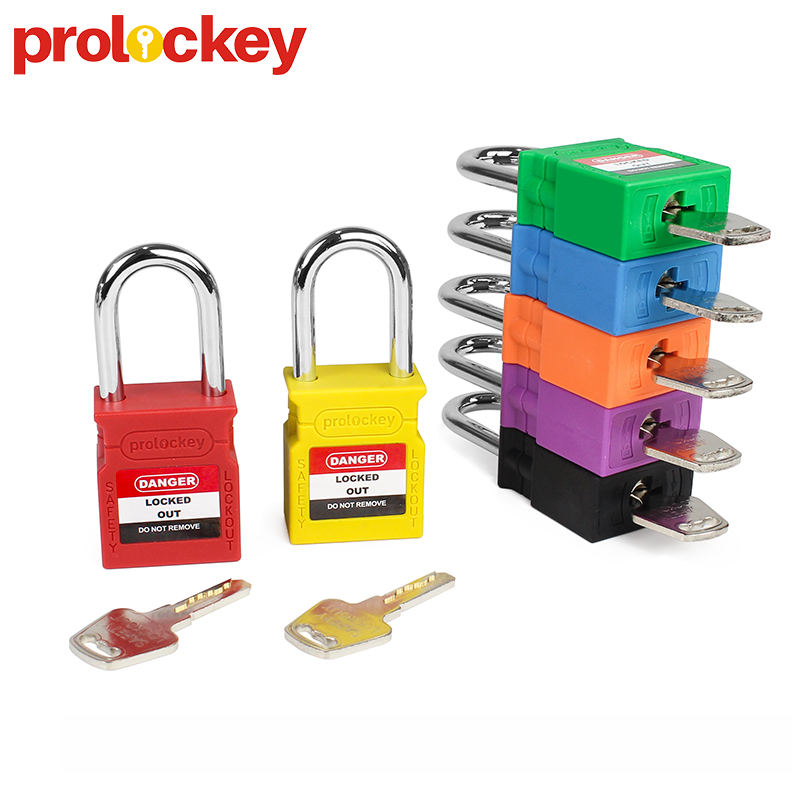
manual for different types of equipment, equipped each maintenance
worker with a dedicated lock and tag, and implemented the principle of
"who locks, who unlocks". Before each maintenance operation, a special
person is assigned to check the energy isolation status, and the warning
tags clearly mark the maintenance personnel, time and risk points. "A
small lock is not only a physical isolation of equipment energy, but
also a 'responsibility lock' for every operator," said the safety
director of the mine.
Relevant
experts said that LOTO is never a trivial "formality" in production
management, but a systematic safety management system involving
equipment, personnel and responsibility. Its core is to eliminate the
risk of unexpected startup of equipment from the source. For
enterprises, implementing LOTO is not only a legal obligation, but also
the responsibility of protecting employees' lives and property; for
operators, complying with LOTO procedures is not only a work
requirement, but also a self-protection measure.
With
the continuous advancement of the standardization of production safety,
local emergency management departments have successively carried out
special rectification actions for the implementation of LOTO procedures.
Inspectors focus on checking whether enterprises have formulated
targeted LOTO operation guidelines, whether employees have received
professional training, and whether there are problems such as "fake
locking" and "empty tagging". For enterprises that fail to implement the
system in place, rectification is ordered within a time limit, and
those with serious circumstances are punished in accordance with
relevant regulations.
As
the saying goes, "Safety is no trivial matter, and responsibility is
heavier than Mount Tai". The implementation of LOTO procedures is a
microcosm of production safety management. It is not only about
"locking" the energy source of equipment, but also about "locking"
potential safety risks, and more importantly, "holding" the
responsibility of production safety and the hope of life and health.
Only when every enterprise and every operator treats LOTO with a
rigorous and serious attitude, can we build a solid safety barrier for
industrial production.


 Address: Tangxia Industrial Park, North Baixiang Town, Yueqing, Zhejiang, China
 Name: Miya
 Tel: 0086-577-62968730
 Fax: 0086-577-62531320
 E-mail:
  Skype:
  QQ:
QQ: