
In 2017, on a construction site in Florida, USA, three workers climbed onto a scaffolding platform in the early morning to prepare for their work. They saw a green label hanging at the entrance - indicating "safe to use". However, just as they climbed onto the platform, the scaffolding tilted and collapsed completely. The subsequent investigation revealed that the date on the green label was signed three days ago, and during this period, the construction site had experienced a severe storm. The "inspector" who signed the label was a laborer with only two years of experience, and he had never been officially granted the authority to stop work by the employer and did not possess the qualifications to identify structural damage.
This accident exposed the most critical flaw in the scaffold tag management system: The label was hung, but was the person who hung it qualified? Was the timing of updating the label accurate? Who is responsible for the authenticity of the label?
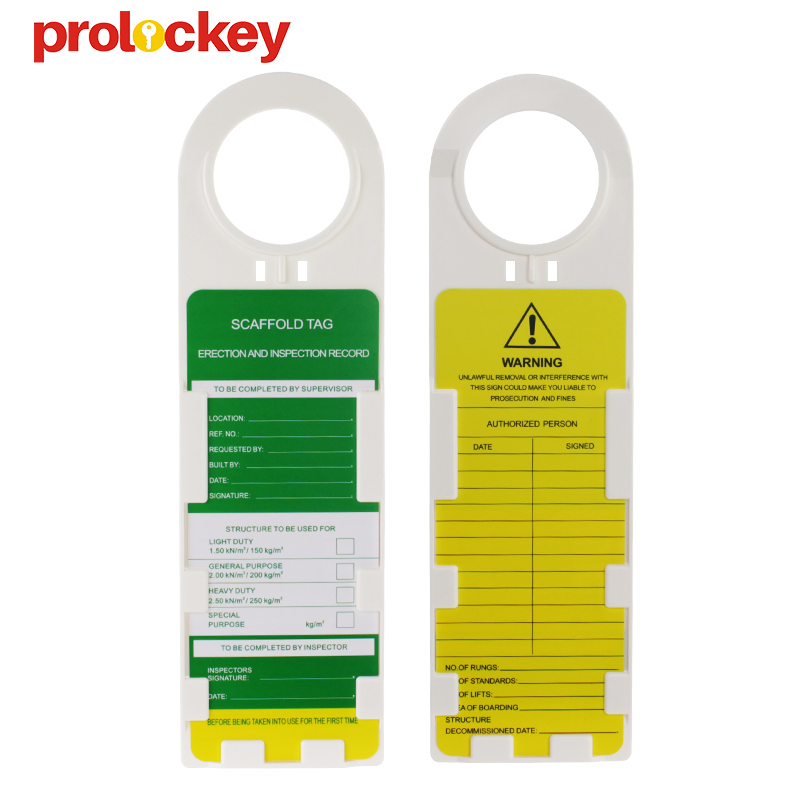
Scaffold Tag is the key visual medium in the construction safety system for conveying "safety status". However, the validity of a label does not depend on the material or printing quality of the label itself, but on a fundamental issue - who has the authority to inspect? Who is responsible for updating? Who has the ability to issue?
1. Core concept: Not "Anyone can inspect" - Competent Person system
According to OSHA's definition, "Competent Person"
The
Occupational Safety and Health Administration (OSHA) in 29 CFR
1926.450(b) clearly stipulated the inspection authority for scaffolding:
Only "Competent Person" can perform scaffolding inspections and issue
labels.
In
an explanatory letter from OSHA, it was particularly emphasized: "No
training course can grant this authority - the power can only be
provided by the employer." This means:
A
worker with 20 years of scaffolding experience, if the employer does
not have a formal written authorization for him to stop work and
rectify, does not constitute a "competent person"
A
new employee who has completed 30 hours of OSHA training, if the
employer officially designates and grants him the authority to stop
work, can be a "Competent Person"
No worker can declare themselves as a "Competent Person" - authorization must come from the employer's formal designation
2. Inspection frequency: When must labels be inspected and updated?
OSHA legal inspection timing
OSHA 29 CFR 1926.451(f)(3) stipulates three legal inspection timing:
Before each work shift - OSHA's 1997 explanatory letter clearly states: "The competent person must conduct inspections before each work shift and after any event that may affect the structural integrity of the scaffolding." If the same scaffolding is used for two shifts, two inspections are required.
After any event affecting structural integrity, including:
Strong wind (typically wind speed ≥ 25 mph / approximately 40 km/h)
Heavy rain, heavy snow, freezing conditions Earthquake
Equipment collision (such as collisions between cranes and forklifts)
Scaffolding components being moved or replaced
Any "temporary" adjustments
Whenever
there is reason to believe that the scaffold may be unsafe - this
clause has an extremely wide scope of application and is a "catch-all"
clause.

 Address: Tangxia Industrial Park, North Baixiang Town, Yueqing, Zhejiang, China
 Name: Miya
 Tel: 0086-577-62968730
 Fax: 0086-577-62531320
 E-mail:
  Skype:
  QQ:
QQ: