
In a grassland in Huaihua City,
Anhui Province, a worker was repairing a shredding machine when the
equipment's power distribution box was not locked out and tagged out,
causing the machine to start unexpectedly. The worker was caught in the
transmission system and died on the spot. This accident once again
highlights the importance of the lockout tagout system in electrical
energy isolation.
Accident details and direct cause
Before
repairing the shredding machine, the worker only turned off the on-site
control switch of the equipment but did not cut off the higher-level
power supply or lock out the power distribution box. During the
maintenance process, another employee mistakenly opened the control
switch, causing the equipment to suddenly start, resulting in
casualties. The direct cause of the accident was the incomplete
electrical energy isolation and the failure to adopt the lockout tagout dual guarantee measures, which led to the equipment being in an unsafe
state during maintenance and prone to accidental operation.
Deep cause of the accident
Disorderly
energy isolation management: The company did not establish a lockout
safety management system for equipment maintenance operations, and
lacked clear regulations on the energy isolation process for electrical
equipment maintenance.
Employees'
safety awareness was weak: The workers did not have sufficient
understanding of the risks of electrical energy release during
maintenance operations and did not develop the habit of lockout tagout.
There
were loopholes in on-site management: The workshop did not set up a
dedicated safety supervisor, lacked effective supervision of high-risk
maintenance operations, and was unable to promptly detect and correct
violations.
Accident lessons and rectification measures
Strictly
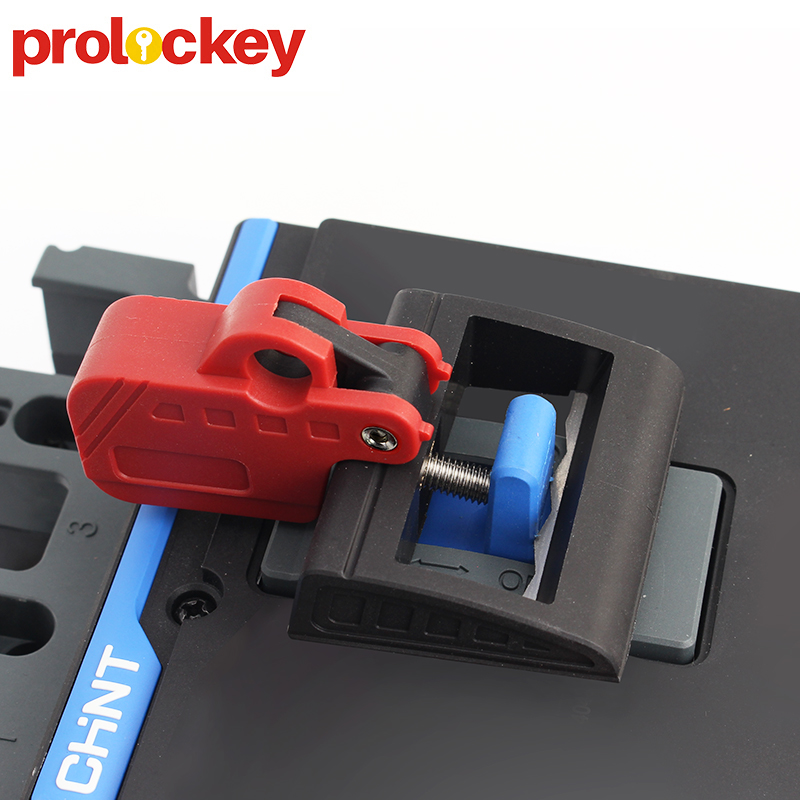
implement the lockout tagout system: All electrical equipment
maintenance must be carried out after cutting off the higher-level power
supply, locking out the power distribution box, with the lock key
uniquely corresponding to the operator, and marking it for warning. The
principle of "whoever marks, whoever unlocks, and whoever energizes"
must be followed.
Improve management systems: Revise the "Equipment Maintenance Energy Isolation Management
Regulations" to detail the energy isolation process for different types
of equipment, clarify the responsibilities of each level of personnel,
and ensure that "each lock has a responsible person, and each tag has a
warning effect".
Strengthen training and assessment: Conduct practical training on electrical energy isolation, explain the
importance and operation methods of lockout tagout through accident
cases, and ensure that each employee masters it proficiently through
theoretical examinations and practical assessments. The execution of
energy isolation should be included in performance evaluations, and
violations should be dealt with seriously.
Enhance on-site supervision: Set up safety supervisors to conduct on-site supervision of equipment
maintenance operations, focusing on checking the implementation of
energy isolation measures, and stopping and rectifying violations
immediately upon discovery.

 Address: Tangxia Industrial Park, North Baixiang Town, Yueqing, Zhejiang, China
 Name: Miya
 Tel: 0086-577-62968730
 Fax: 0086-577-62531320
 E-mail:
  Skype:
  QQ:
QQ: