
LOTO Lockout/Tagout: From Concept to Implementation
In the industrial production field, safety is the core bottom line throughout the entire process, and lockout-tagout (LOTO, Lockout/Tagout) as a key means to control dangerous energy and prevent equipment
misoperation is a core measure to ensure the safety of workers and
reduce the incidence of safety accidents. From the abstract concept of
safety to the practical implementation process, LOTO is
not only a set of standardized operation norms, but also an important
part of the enterprise's safety management system, covering all
scenarios such as equipment maintenance, repair, and cleaning. Its
standardized implementation directly determines the safety bottom line
of industrial production. This article will start from the core concept
of LOTO, analyze its implementation process, key points, and common
misunderstandings, providing comprehensive and practical guidance for
industry practitioners.
I. The Core Concept of LOTO Lockout/Tagout: Not Just "Locking + Placing a Tag"
Many
industry practitioners' understanding of LOTO is limited to "putting a
lock and attaching a tag", but in fact, LOTO is a systematic program for
controlling dangerous energy, and its core is to prevent equipment from
accidentally starting or energy from accidentally releasing during
operation through physical isolation and clear warnings, preventing
safety risks at the source. According to OSHA standards and domestic
"Work Safety Law" requirements, the official definition of LOTO is:
Before equipment maintenance, repair, debugging, or cleaning operations,
through closing, isolating various dangerous energy sources of the
equipment, using special locks to lock the isolation devices, and
hanging standardized warning signs to clearly inform that the equipment
is in a "prohibited start" state, to prevent others from mistakenly
operating and causing safety accidents. From the core elements, LOTO
includes two inseparable parts: "locking" and "placing a tag". They
complement each other and are indispensable. "Locking" is physical
protection, by using special locks (such as clasps, circuit breakers,
valve covers, etc.) to lock the energy isolation devices (switches,
valves, circuit breakers, etc.), forming a hard protection, ensuring
that unauthorized personnel cannot start the equipment; "placing a tag"
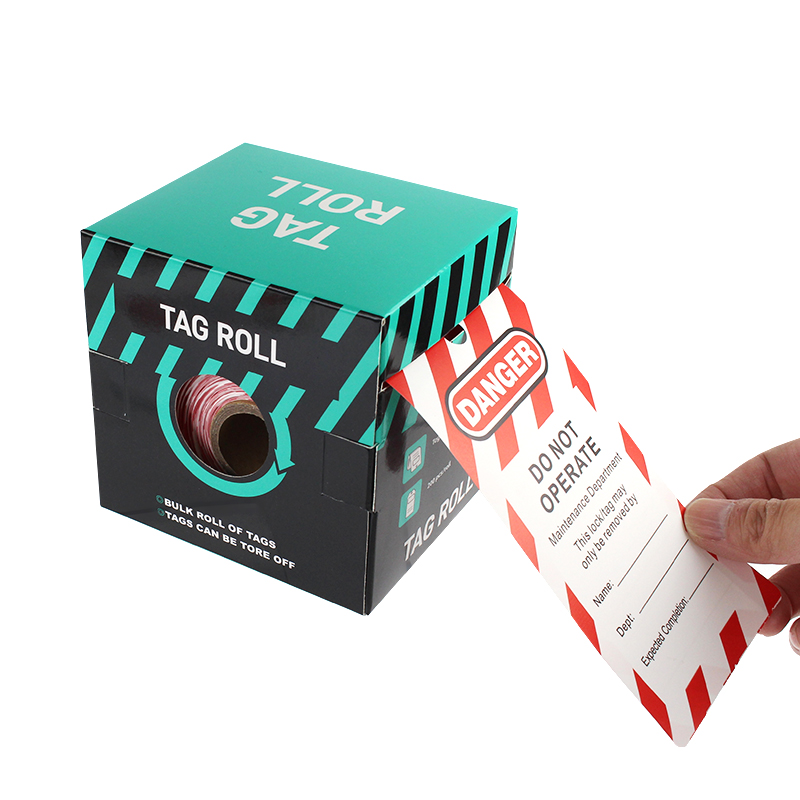
is a warning reminder, by hanging eye-catching "Someone is working, do
not start" or "Under maintenance, do not close" signs, clearly informing
the operation status, operators, and operation duration, providing
visual warning, which compensates for the visual blind area of locking
protection.
It
should be noted that the application scope of LOTO covers all
industrial scenarios with dangerous energy, including power, machinery,
hydraulic, pneumatic, thermal, chemical, etc. All types of energy
sources, whether in factory production lines, chemical equipment, or
maintenance of amusement facilities (such as Lego Big Wheel morning
inspection), as long as equipment shutdown operations are involved, LOTO
procedures must be strictly implemented [3][7]. Its core purpose is not
"cumbersome procedures", but through standardized operations, to
separate dangerous energy from workers, which is also the core reason
why LOTO has become a global industrial safety standard.
II. The Implementation Preconditions of LOTO Lockout/Tagout: Clear Core Elements and Responsibility Division
The
standardized implementation of LOTO requires first clarifying three
core prerequisites to avoid the operation becoming a formality due to
missing elements or unclear responsibilities, which may lead to safety
hazards.
First,
clearly identify the range of dangerous energy. Before the operation,
all potential energies of the equipment must be comprehensively
inspected, including explicit energies (such as electricity, gas,
hydraulic oil) and implicit energies (such as residual electrical energy
in capacitors, spring potential energy, compressed gas, etc.), and no
energy source should be overlooked. For example, even if the plug of
some electrical equipment is unplugged, the capacitor still stores
electrical energy, and if the discharge treatment is not carried out, it
may still cause electric shock risks [1]; in mechanical devices, the
compressed spring, even if the main energy source is cut off, may still
cause mechanical injury due to the release of potential energy. The
identification of these implicit energies is the basis for the
implementation of LOTO.
Second,
equip with standardized tools and signs. The LOTO operation requires
the use of dedicated locks and tools. It is strictly prohibited to use
non-dedicated tools such as iron wires or ordinary ropes as substitutes.
Such tools do not have the mandatory isolation function and are prone
to breaking and lack warning effects. They are considered serious
violations. Locks should follow the principle of "one person, one lock,
one key", and the keys should be properly kept by the operators
themselves. It is strictly forbidden to transfer or share the keys.
Warning signs should be clear and eye-catching, and clearly indicate the
operation content, the operators, and the contact information to ensure
that all people passing by or contacting the equipment can clearly
understand the risks.
Thirdly,
a clear responsibility system should be established. The LOTO operation
follows the principle of "who operates, who is responsible". The
responsibilities of three types of core personnel are clearly defined:
the authorized personnel (those who have received training and
authorization to perform LOTO operations) are responsible for
implementing the lock, tag, and unlock procedures throughout the
process; the affected personnel (workers in the surrounding area of the
operation area) need to be aware of the LOTO operation status and must
not touch the locks, signs, or equipment without authorization; the
safety manager is responsible for the training, supervision, and review
of the LOTO process, and promptly investigates any violations of the
operation procedures. The enterprise should fully implement the LOTO
responsibility at all levels to ensure that each link has a dedicated
person in charge and supervision.

 Address: Tangxia Industrial Park, North Baixiang Town, Yueqing, Zhejiang, China
 Name: Miya
 Tel: 0086-577-62968730
 Fax: 0086-577-62531320
 E-mail:
  Skype:
  QQ:
QQ: